
Worship

Join us for Worship on Sundays at 9:00 am and other events throughout the month.
Worship is the submission of all our nature to God. It is the quickening of the conscience by God’s holiness; the nourishment of the mind with God’s truth; the purifying of the imagination by God’s beauty; the opening of the heart to God’s love; the surrender of the will to God’s purpose—all of this gathered up in adoration.
~William Temple
ENJOY THE PROLOGUE, BULLETIN, and SERMON TEXTS BELOW

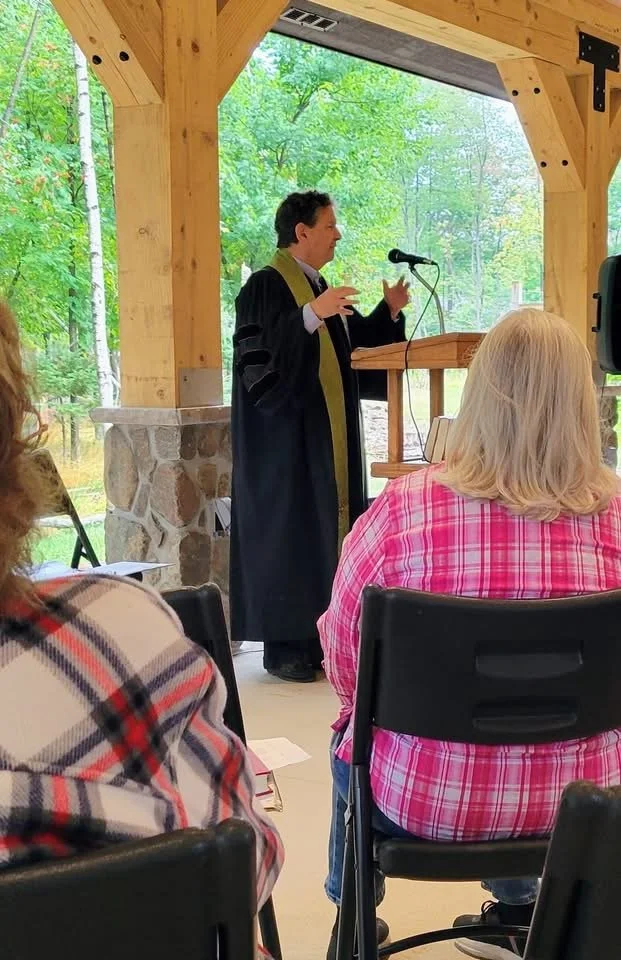
-
Sixteenth Sunday after Pentecost
EXODUS 14:19-31
EXODUS 15:1b-11, 20-21
ROMANS 14:1-12
MATTHEW 18:21-35
The Prologue
In the Witness from the Epistles in the letter composed by the apostle Paul to the church at Rome, the former Pharisee was obviously addressing a point of contention within this pivotal church, one of numerous congregations among the various churches to whom this passionate missionary caringly and compassionately interacted, his words of advice designed to admonish, to cajole, to celebrate, and to encourage. Evidently, a quarrel, call it an ecclesial spat, had arisen within the communal system arguing over a determination about who gets to eat what, assuming that kosher laws were a part of the dynamic and thus a part of the problem, the mix of Gentiles and Jews still a bit like trying to blend oil and water, an almost hopelessly vain attempt at the time. Some within this Roman cultured congregation, context always a defining factor, were eating anything and everything, eating to their heartsʹ desire, ravenous carnivores eating meat and more meat, all they could eat, whatever their palate preferred, while on the other hand, others, being a bit skittish, nervous Nellies, considered to be weaker in their faith and thus with their appetite, chose to eat only vegetables, consuming bland plant life as their sole dietary supplement. Different strokes for different folks! You say potato, I say potáto! Once again, can’t we all just get along? Once again, consensus is the spice of life, the better part of personal and/or corporate valor!
-
Fifteenth Sunday after Pentecost
EXODUS 12:1-14
PSALM 149
ROMANS 13:8-14
MATTHEW 18:15-20
September 6, 2026
The Prologue
In the Witness from the Epistles in the letter the apostle Paul penned to the church at Rome, the former Pharisee, a man steeped in all things Judaism and Jewish tradition, including a vast understanding regarding the tent maker’s Judaic religious leanings, the man from Tarsus makes a bold statement in this epistle as he comments on the ancient Hebraic Law, the apostle particularly addressing what is known as the Decalogue, the big ten historically called the ten commandments. While not dismissing these sacred covenantal decrees in this enlightening epistolary offering, Paul makes a most astute, a most salient point, pointing out that love is the great equalizer, the absolute law, trumping any detail presented in the original ten that morphed into, expanded into 613 variations, some of these decrees amounting to nothing more than inanely trivial rules and regulations, irrelevantly getting the Israelites up in the weeds, minutia ad nauseum. Yes, Paul makes life delightfully simple! Be loving! Always and everywhere be loving! The rest will take care of itself! Echoing the immortal words of Bobby McFerrin who once happily sang, “Don’t worry! Be happy!”
-
Fourteenth Sunday after Pentecost
EXODUS 3:1-15
PSALM 105:1-6, 23-26, 45c
ROMANS 12:9-21
MATTHEW 16:21-28
The Prologue
Let us all acknowledge that living in community, any community, any kind of community, is hard work, difficulties always an emerging reality in every case, even within the best relationships. In terms of the “Congregational Way”, the polity surrounding congregationalism is always messy, a messy enterprise, a messy exercise! As if it was not bad enough that the early “followers of the way” of Jesus, these Judaic sectarian outliers who became known as Christians at Antioch, were constantly pursued by the Romans, persecutorial terror and torture always gaining ground, nipping at the heels of the faithful, within these growing churches internal squabbles abounded, disputes continually arising about an ever emerging and evolving theology. More specifically, the complexity surrounding the development of Christological constructs, and of course, the always annoying and antagonizing, an ever-present threat, the raucous debate regarding inclusiveness versus exclusiveness, was a toxic debate sadly determining who was in and who was out, who could sit at the table for the weekly Agape Feast fellowship. The apostle Paul reminds us contemporary church sorts to keep our eyes on the prize, that love trumps any and every impediment or obstacle that we unfortunately can creatively imagine, imaginatively create! To recall a line from Michael Jackson, putting a twist or a different spin on a quote he once made, be a lover, not a fighter, never a hater! Kumbaya!
-
The Prologue
There are some Sundays when the lectionary appears from a first glance to be a homiletical desert, the lections from a surface reading seeming to offer little or nothing of note for the preacher. On those seemingly barren Sundays, the challenge to preach with assurance and confidence is clearly a force with which to be wrestled and reckoned. Thank goodness those Sundays are far and few between, tending to be the exception and not the rule, the choice of four texts from which to choose each week usually affords a satisfactory result. Other Sundays, like today, however, offer a smorgasbord, a veritable cornucopia, an overflowing plethora of textual options making sermon preparation much less challenging and thus much easier to navigate and negotiate.
In the Witness from the Hebrew Bible from the book of Exodus today, always beginning with a curious question regarding the authenticity, the historical veracity, related to the events contained therein, we read the delightful story of two bold women, the courageous co-conspirators Shiphrah and Puah. This subversive couple deviously hatching a brilliant plan, subterfuge in motion, secretly conspiring to stubbornly ignore, to refuse orders, to willfully dodge the demands of the Pharaoh in power, who would have been either Amenhotep II (18th Dynasty) or Ramesses II (19th Dynasty), saving perhaps thousands of baby Hebrew boys and preparing the way for the birth of Moses and the great epic stories of liberation that follow. In the Witness from the Epistles in the apostle Paul’s letter to the Roman church this morning, we read that we are to present ourselves as living sacrifices, holy and acceptable to God, the Pauline equivalent described by the former Pharisee as a reasonable act of worship. This observation includes the always necessary reminder that while we are many individuals, we are one body in Christ, hopefully of one accord, unified to the max! Finally, in the Witness from the Gospels in Matthew, we read a story in which Peter, the rock, proclaims the shockingly bold revelation that Jesus is the long-awaited Messiah, the son of the living God, a text that makes the audacious claim, what biblical scholars claim is erroneous, that Jesus founded the Church in that bellwether moment. We will see which lection gets top billing today!
-
The Prologue
Preaching to the crowd, teaching profound lessons as was the custom of the rabbi from Nazareth, the Galilean gaining notoriety by the day as he went about doing his thing, in this case the erstwhile peasant reformer was found condemning any variety of negative utterances that might dare come forth out of the mouth of an individual. Usually, this text is naively and inappropriately interpreted as a reprimand, a prohibition against profanity, the bane of having a toxic vernacular, a creatively rancid vocabulary, the foul potty mouth befitting a sailor! Frankly, this is a rather pedestrian understanding, oh poo, all of us knowing full well that Jesus was speaking about something far greater than swearing, verbal salvos far deeper, something far more egregious, much more sinister and insultingly injurious, prejudicial epithets doing much harm, the rabbi making warnings about words, that like stones, convey meanings that are hurtful, demonstratively wickedly evil! After all, whatever we say is a strong indicator of what we think, the thoughts emanating from within the recesses of our hearts and minds. No sooner than Jesus uttered this warning, he committed the very same infraction, failing his own prior admonishment regarding the violation, the sin of which the rabbinical prophet had just declared as off limits, a no-fly zone, totally unacceptable, when he called a Canaanite woman a dog! So, just what gives here! After all, what is good for one is good for all, the rules fairly apply to everyone! Inquiring minds want to know! Oh my!
8-16-26 Sermon Can’t be the Canaanite, Must be the Canaanite
-
The Prologue
In the Witness from the Epistles, in the letter the apostle Paul composed to the church at Rome, this creatively imaginative epistle writer weaves together a host of spiritually laden themes. Intertwining them into one cohesive narrative as an apparently accidental Pauline technique employed by the apostle, this short section of the epistle seems to have been born out of an unintentional process that produced a steady stream of random consciousness resulting in some great prose, some of it quite poetic! At the conclusion of his musings in this brief lection we read today, the former Pharisee ponders the question regarding our responsibility, perhaps our accountability, to boldly proclaim to unequivocally declare a prophetic witness, to declare our experiential dance with the Divine, to faithfully describe our religious experience with Christ as we seek to hospitably share our belief by faith in Jesus, echoing the prophetic words of the peasant reformer, the rabbi from Nazareth, our brother and friend, our guide, our mentor and model, the rabbinical peasant prophet we believe to have dispensed the words of life as he unveiled a new expression of the old tradition, pouring new wine out of old wineskins, Judaism recast, recalibrated and retrofitted in numerous imaginatively creative ways. As postmodern progressive Christians, we possess a most liberating, articulating a truly freeing message speaking a relevant word to seekers who are searching for a more openly expansive, “extravagantly welcoming”, a radically hospitable, embracingly inviting and inclusive word that is based in critically thinking, intellectually curious, approaches to the Bible, immersed in all things ecclesiological and theological. In terms of celebrating diversity, we continue to be a work in progress, process a core aspect of our evolutionary becoming. Today, we explore the Christian/Jewish dynamic, a relationship that has been so troubling for centuries, knowing we must find ways to bridge the gap, to embrace a covenant of mutuality demanded for two religious peoples forever connected as brothers and sisters hardwired, interconnectedly enmeshed, continually emerging and evolving from one ancient covenantal promise. “How beautiful are the feet of those who bring good news!” Oh, so very true! Perhaps no truer words were ever spoken!
-
The Prologue
Welcome to A Celebration of Hymnody Heritage! Down through the ages, century after century, Christians have gathered to raise their voices in praise, finding comfort, hope, joy, and strength in singing the great hymns of the faith. As we come together for worship this morning, we continue as a part of that rich tradition, encouraging one another and offering our songs as an act of praise and worship to God.
As our service begins, let the words of John Wesley’s Directions for Singing inspire us! Wesley encouraged everyone to “Sing all,” reminding us that every voice is welcome. He urged us to “Sing lustily and with a good courage,” but also “Beware of singing as if you were half dead, or half asleep.” At the same time, Wesley advised worshipers to “Sing modestly,” so that no single voice overwhelms the congregation. He encouraged singers to “Sing in time,” keeping together with the rest of the assembly, and “Above all sing spiritually,” with an eye toward pleasing God more than pleasing ourselves, giving attention to the meaning of the lyrics, the words we sing. May we follow the wise counsel expressed by Wesley—singing with enthusiasm, humility, unity, and thankful hearts as we lift our voices together in praise! (John Wesley, Select Hymns with Tunes Annext, 1761; 1 Corinthians 14:15; Ephesians 5:19).
As we gather for worship today, the theme carrying our service centers around hymnody. As we do every week, we join a singing tradition that has united Christians for centuries, from the earliest believers known as “followers of the way” who lifted their voices in psalms and simple songs, to congregations around the world singing hymns old and new. The people of God in various worshipping contexts have found solace, music assuaging our oft anxious hearts and minds, music engaging the senses, getting us in touch with the emotional aspect of our liturgical and sacramental exercises. Every hymn, including numerous Gospel Songs and “contemporary” pieces, carry echoes of the faith, hope, and praise of our forebearers in the faith who came before us, while giving us language to express our trust in the Holy as we experience the Divine in our contemporary settings. As we begin A Celebration of Hymnody Heritage, may these familiar melodies, beautiful harmonies, and timeless lyrics draw us together as we worship, reminding us that we are part of a larger living song of faith that continues generation after generation.
-
The Prologue
In the Witness from the Gospels in Matthew, we read one of the few parables that appear in this Gospel originally written for, directed at a primarily Jewish audience. This lection continues a theme that began last week with the parable called the sower, a story dedicated to planting seeds in a variety of soils. In this second seed-focused parable we read this morning, similar but different than the first, Jesus shows that before he became a local rabbi of note, taking his earthly daddy’s cue as a carpenter by trade, he clearly revealed that he also knew a little bit about farming, specifically regarding the growing of wheat. In his letter to the church at Rome, the self-appointed apostle Paul reminds his audience in this epic bellwether epistle that all creation longs to be set free, liberated from the enslavement of decay, “groaning together as it suffers together the pains of labor,” toiling in travail, inherent dynamics driving the modus operundi in each and every one of us in all our tests and trials, our troubles and tribulations, truly a metaphorical menagerie on steroids.
-
The Prologue
As we all are painfully aware, it is more than transparently obvious that we live in two worlds today, worlds that seemingly have no hope, no possibility of colliding in a positively productive way. Frankly, the divide is getting more pronounced, our “sides” becoming farther and farther apart, polarities diverging moment by moment with each new passing day. With crystal clarity we see a dichotomy revealing opposing forces at work, competing narratives that are impossible to harmonize, to even remotely have any chance of ever finding the sweet release, the succor and solace of common ground that would help lower the toxicity and would help assuage our communal angst, our extremely fear-driven anxiety, commonality being the operative word. The anger and frustration we are experiencing during the living of these days is palpable, more than a slow and simmering disturbance, truly boiling within and among us, a veritable cornucopia of disagreeable disagreement, the essence of a fractured and fracturing division, seeming to be getting worse by the minute with every tick tock of the clock, our civic narrative devolving with each new passing day, clearly revealing a non-expandible bridge already too far, perhaps having already snapped, an unsustainably widening gap, becoming an irreparable breach, a great gulf fixed, a sucking gravitational vortex pulling us all in opposite directions.
In the lection we read from Genesis this morning, we recall a story describing sibling rivalry on steroids, an epic tale recounting the adventures of two brothers, Esau and Jacob, each one pitted against the other even from the time of their conception, including the incubation period in which they evidently wrestled mightily inside their tormented mother’s womb. Perhaps there are lessons to be discovered as we unpack the dynamics associated with their legendary competition and borderline hatred, until they found delightful resolution, a much-needed reconciliation. Just maybe, their story can offer us some solutions, some ways forward, solving our myriad communal conflicts, assuaging our civic anxiety, to bring peace and much needed harmony and tranquility to our constant warring ways, figuratively and literally. There must be a way to resolve these uncivil dynamics, a pathway leading us out of the dilemmas that seem to define our local communities and our national dialogue.
-
The Prologue
In the ancient world, including that part of the globe we call the Near or Middle East, not only was polygamy the primary mode of religious persuasion, but child sacrifice was prevalently rampant, a cultic practice conveying the ultimate manner of fidelity, swearing allegiance, yes, showing proper fealty, honoring the seemingly unlimited number of pagan deities. Emerging from the multiples of religious variations, the Hebrew people somehow managed to emerge and evolve, overcoming this wicked evil, embracing a new revelation, a radical revelatory development rooted in monotheism, the honor and worship bestowed upon one God holy and divine, this revelational being even given a glorious title, sporting a primary name among others that indicated a uniquely special intimacy, Yahweh (YHWH)! Today, we read an epic tale reminding us of a once horrifically demonic sacramental rite, a perverse ritual, the practice of child sacrifice, a draconian vestige stubbornly handed down from primitive traditions reflecting a bygone era that eventually would thankfully cease and desist, becoming a dinosaur, a relic of the past. This sobering legend recorded in Genesis portends a primary, a vital need to embrace continuing revelation, process theology always a priority in play, believing that God is still speaking, and that we, along with our belief by faith, acknowledge that our religious assumptions and presuppositions must always evolve lest our belief systems stagnate, die a necessary but painful death. Such is the way of progressivism, progressive theology never static, but always in motion, always on the move, marching into a bright future. The bottom line is this, leave the past behind, yes, in the past, because, in the immortal words of former President George W. Bush “the past is over”, yes, amazingly articulated. In other words, in the words of Jesus, “let the dead bury the dead!” And, it is up to us to determine that which is truly deceased, DRT, dead right there, dead in its tracks!
-
The Prologue
Today we closely examine the difficult dynamics, exploring deeper the edgy challenges associated with the triangulated and complicated relationship between Sarah and Abraham and their servant girl, their maidservant, Hagar. As we are often prone to do with our biblical heroes, along with their biographers, these imaginatively creative writers, editors, and compilers, we tend to sugarcoat, to fragrantly perfume their epic stories, glossing over their sometimes, seemingly, demonic actions, behaviors that can clearly be deemed as deplorable, yes, as Hillary Clinton once opined in a different context, “a bucket of deplorables!” We frequently spiritualize the motives of these characters, making excuses for any and every sordid behavior associated with their person. The narrative we read this morning is an excellent example, another among numerous biblical texts that remind us of one of the worst, the most horrific cultural traditions pervading the ancient world. The subjugation of women was rampant back in the day, ancient practices and protocols that treated women as if they were expendable, considering them as nothing more than property, chattel, afforded no better status than livestock and/or other prized, or not, possessions. As we celebrate PRIDE this month in the United Church of Christ and as a nation, at least delightfully observed by some among our national citizenry, we are soberly reminded that all of us are created imago Dei, in the very image of the Divine, the Holy One making no mistakes, and that we are called to live egalitarian lives, equality an unequivocal expectation, a requirement for anyone who seeks to serve God, who claims Christ as followers of Jesus.
-
The Prologue
Frankly, this Sunday on the liturgical calendar, another sacred day unfolding before us during the Church Year, should be called “Hospitality Sunday”, “A Celebration of Hospitality”, a calendric designation based and built around the lections chosen for this specific day of worship. Our lectionary journey begins at the oaks of Mamre with Abraham and Sarah as we read about their ongoing story as this narrative continues to unfold in Genesis 18, the future father of the faithful and his aging bride camped out in a tent, delightfully interrupted by their unnamed but very welcomed visitors turned guests, indeed a delight to their hosts. Hospitality is posited as an event at this point of demarcation in the Bible, a cultural practice that would emerge and evolve as a hospitable practice informing a theological mandate, bridging a host of cultural divides. In the Gospel of Matthew, we read the epic story of Jesus sending the twelve rookie disciples on a mission trip, giving these raw apostles clear instructions about what to take on the journey, and more importantly, what to leave behind. Their travels made for a hospitality test in the making, indeed on steroids, revealing the same expectation reserved for all of us, despite the uniqueness of our different, our local, context, the same cultural challenges always on display as we continue our faithful journeys!
-
The Prologue
Of the many things that can be said about the Bible, one thing we soon discover, one thing continues to be revealed, unfolding before our very eyes, and that thing is the seemingly unlimited places within the biblical narrative where we discover significant thematic or topical points of interest found within the shortest, the smallest of texts. Even in what seems to be the most benign, trivial, or even irrelevant text, what we often call “passages”, we find a ginormous, a humongous, message. In our Witness from the Hebrew Bible chosen for today, we have one such classic and glaring example! In this lection we read, “At that time the Canaanites were in the land. Then the Lord appeared to Abram and said, ‘to your offspring I will give this land!’” And this part of what we call the Holy Land, this part of the Near or Middle East, has been continuously contested ever since, numerous wars fought with multitudes killed. This text that appears before us today seems innocent enough, innocuous on the surface, but is a sobering reminder of the sensitivity, the care and caution, that must always be exercised when engaging biblical exegesis, when interpreting any biblical text, off-the-cuff or flippant, easy understandings never acceptable or appropriate. Perhaps a warning label should come with the Bible as well as with any other presumed holy text, no matter the source of the faith tradition!
6-7-2026 Sermon: What to do with the Subtle Nuance of Scripture
-
The Prologue
A few years ago to celebrate Trinity a local United Church of Christ (UCC) congregation in suburban Seattle, Washington, at the request of the youth group, put on the marque for all the world to read, “God is They/Them!” Well, as you can imagine there was a lot of reactivity from passerbys who surely did a doubletake, not believing their eyes as they were reading what they were reading. The reaction was all over the map, with a high velocity of negativity, some backlash by the offended needing to preserve the orthodoxy rooted in their doctrinal rigidity, a nerve obviously struck, a cord picked! Obviously, a lot of people still defiantly hold on to, need a male deity, a virile and testosterone laden muscular god emitting and exhibiting dynamics associated with whatever constitutes maleness, solely possessing masculine qualities. While mortals have not seen, it is safe to say for certain that God has no identifiable biological parts!!! Many folks continue to benignly refer to God by traditional but limiting, and shall we suggest very inappropriate pronouns, “he/him/his”! After all, as our theology has evolved, we have learned that God is neither male or female, but neutral, not a boy or a girl, a man or woman, but interestingly and intriguingly rejecting and embracing both feminine and masculine images, non-binary seeming to be a poor but better designation, a more apt description. Part of being Open and Affirming, “extravagantly welcoming”, hospitably inviting and inclusive, is to embrace the full spectrum of a magnificent kaleidoscope that at best is a shadow remotely describing and giving definition to the Holy, the essence of holiness the Church has traditionally mystically labeled as Trinity, a description of a mysteriously transcendent God that appears nowhere in the Bible.
-
The Prologue: Pentecost always offers the reminder that God is unimaginably powerful. God created the heavens and the earth, the sea and all that is contained within it. Yet we seem to doubt or dismiss, failing to fully believe in the creatively divine power of the Holy when we gather for worship. After some stimulating conversational fellowship, we sit down in an orderly fashion, politely well-trained, as if on cue, to stand and sit like obedient puppies at the proper times, sing hymns, listen quietly or ignore the sermon, drink some real or pretend (decaf) coffee, and then go home. The writer, Annie Dillard, had this to say about our liturgical procedures and practices, “Does anyone have the foggiest idea what sort of power we blithely invoke? Or, as I suspect, does no one believe a word of it? The churches are children playing on the floor with their chemistry sets, mixing up a batch of TNT to kill a Sunday morning. It is madness to wear ladies’ straw hats and velvet hats to church; we should all be wearing crash helmets. Ushers should issue life preservers and signal flares; they should lash us to our pews. For the sleeping god may wake someday and take offense, or the waking god may draw us to where we can never return.”1
-
The Prologue
Today we are confronted by lections that challenge the scope of our imagination. Ascension is such an unbelievable notion, clearly refuted by all the basic laws of gravity, physics and scientific theory included, all these discoveries known to humanity. Had Jesus really “lifted off” in said fashion he would still be in orbit today, nowhere near the presumed place of his ultimate destination. So, how do we interpret these texts? What word can these narratives speak to twenty-first century Christians? Are these myths even remotely relevant for the postmodern mind? The answer is a resounding “maybe!” Today we consider what it is like to live lives of faith without Jesus in our midst. In terms of belief and believing, this amazingly fantastical, yes fanciful story, we continue our journey into the transcendent mystery that is the Divine, walking by faith and not by sight!
-
The Prologue
Once every three years, the lectionary invites us to visit the ancient city of Athens, Greece, the great enclave that was the centerpiece, the very epicenter of Hellenistic culture, an intellectual hub filled with philosophers and poets, including all the intellectually curious, a city overflowing with purveyors of the most profoundest critical thinking wonderment. Once upon a time, the apostle Paul visited Athens and toured its magnificently incredible sights, including its amazing monuments. The former Pharisee and humble tentmaker was no doubt overwhelmed by the magnitude of majesty representing numerous pagan temples, each one honoring an idolatrous deity, each image depicting various wonders of nature. While in a city that reflected an international flare, metropolitan in every way imaginable, Paul gave one of his most intuitive and intellectually inspiring sermons, recorded in perpetuity in the book of Acts. Rather than insulting the locals because of their religious pluralism, an interfaith smorgasbord, Paul applauds their diversity, suggesting that only one thing was lacking among their myriad statues. It was obvious that the Athenians were completely unaware of Yahweh, the liberating God of the ancient Hebrews eventually becoming the children of Israel as they formed a great nation, including the equally special offspring of the Holy One, followers of our brother, guide and friend, mentor and model, the humble rabbi from Nazareth, the one called the very Christ of God. Paul reminds his listeners that all of us are offsprings of the Holy, creating a covenantal relationship that is as up close and personal, as intimate as can be humanly imagined. Today, we explore another dimension of celebrating diversity and what it means to model disagreement!
5-10-26 Sermon: Modeling Disagreement! Celebrating Diversity!
-
The Prologue
The epistle writer of I Peter in this anonymous letter declaratively invokes some beautiful literary imagery describing the followers of the way of Jesus in most glowing terms, truly terms of endearment. We are delightfully described as a chosen people—invoking the ancient selective designation once reserved for the children of Israel—adding that we are also a royal priesthood, a holy nation, God’s very own people! These glorious attributes, truly rich blessings indeed, make for quite a lofty standard, a high bar set before us, that if we were to try and ascend those great heights would fail miserably, fall flat on our faces. The promise, however, is that the Divine has already imbued these endearing traits within each and every one of us, perceived blessings that we cannot earn but are instilled deep in our spirits, to the depths of our very souls, ours to enjoy as we seek to live the servant life, “servanthood” being the operative word, as we serve Christ and follow Jesus. The words in this pastoral letter are reminders that we are always and evermore, forever graciously loved, filled with the mercy from which all manner of peaceful blessing flows, saturating our very being.
-
The Prologue
The easier path to preaching on the Fourth Sunday of Easter, this Celebration of the Good Shepherd, would be to craft a sermon touting the features and benefits of Psalm 23, clearly the easy way out of any homiletical dilemma. On this high and holy day in Eastertide we are comforted by the Psalmist who composed these warm and fuzzy pastoral images that we tend to always recite at funerals and memorials. Tempting as it is, this popular lectionattributed to king David always seems to get star billing, the usual amount of warranted attention. But today we are visiting a rather obscure epistle, the anonymous letter of I Peter. This narrative is directed toward the plight of early Christians who were being terrorized and tortured, persecuted to the max, many of the faithful martyred for the cause. This unknown and thus anonymous epistolary writer reminds the reader, then and now, of the lovingly gracious way, the passively active response as devoid of reactionary vitriol as was possible, that the followers of Jesus were to politely and graciously conduct themselves, yes, turning the other cheek, proudly wearing whatever abuse was being perpetrated by those who would be adversaries, perceived enemies of the way of Christ.
-
4-17-2026 Bulletin
4-17-2026 Sermon: Oh Mysterious Mystery
-
The Prologue
A closer reading of the story of the empty tomb as told in the Gospel of Matthew reveals a very different take, a radical alternative compared with the other Gospel renditions, acknowledging, that to a degree, the same could be said about Mark, Luke, and John. But in the case of the Matthean version there is indeed a radical departure! According to his recollection of events, Matthew tells his readers that the tomb was not opened sometime during the night as the other Gospel accounts assume, but rather was unsealed simultaneously, the sudden opening the result of a sudden earthquake! All this transpired as the two women, Mary the Magdalene and the anonymous other Mary, approach the entrance to the tomb, no doubt to grieve, though Matthew declares “to see!” The Gospel writer assumes, in this text, that the body had been anointed before burial, a departure from the other Gospels. The message relayed by Matthew is a reminder that certainly, obviously, surely, something happened, something profound, something of serious import, so stunning, yes, earth shattering, an episodic recalibration and retrofitting, resurrection rearranging the course ;of history, an act of divine interference, a holy intervention that continues to change the world! Still, and always, every aspect of resurrection a matter of belief by faith!
-
The Prologue
Maundy Thursday is the day in Holy Week when we recall the sequence of orchestrated events leading to the death of Jesus on the cross, the evil deed wrought by a number of factors, a host of dominos falling into place, sealing the fate of the rabbi from Nazareth, circumstances determining that the humble Jewish peasant would be summarily executed by crucifixion as if he were a common criminal. On this night, the disciples gathered for a meal that would prove to be their last with Jesus. In a demonstration of authentic servanthood, despite the dark shadows closing in around him, Jesus surprisingly began to wash the feet of the disciples, the ultimate act of humility in the ancient world. All this took place before those vivid scenes in the garden that culminated with the arrest, trial, and condemnation of the great and humble teacher. Recalling the sacred events of that evening, we gather to share a meal and to receive Eucharistic bread and wine, Holy Communion, the holy supper of our Lord. We have also gathered to wash one another’s feet, that in this act of humility we might catch just a glimpse of the drama played out on that fateful night more than two thousand years ago. Traditionally used in either the Maundy Thursday or Good Friday liturgy, the ancient Tenebrae, from which this service of darkness originates, dates to the early years of the Church. Derived from the Latin word meaning "shadows," this service of darkness depicts, through the extinguishing of candles and the dimming of lights, the flight of the disciples and the approaching sadistic murder orchestrated by the “powers and principalities” of this world, case closed . . . presumably!
-
The Prologue
The lections for this Sunday of the Liturgy of the Palms and Liturgy of the Passionare all over the map! We begin our liturgical journey, a roller-coaster ride on steroids with the faithful cries of Hosannas, offering warmest gifts of palm branches spread before Jesus, a regular fun house of messianic proportions. Yet we quickly descend into a tunnel that will become Jesus’ own personal house of horrors. As for us, the multitude, it is as though we had entered a psychedelic carnival funhouse of mirrors, everything distorted beyond recognition. We can almost empathize and sympathize with the crowd that seems more than confused and confounded about this would be king who would not be king. This ain’t no amusement park! No wonder we are told that Pilate wanted nothing to do with any of this craziness, ending with the angry, faithless, cries of an irrational mob scene, “Crucify him! Crucify him!” Our Lenten journey takes a sharp turn today, as we, with mixed emotions, joyfully celebrate the gladsome Liturgy of the Palms and endure the deadly dirge driving the depressing doom and gloom, the agony, in the Liturgy of the Passion, minor keys on steroids!God, give us the faith to see us through our solemn sojourn to the end of this part of a holy march to the cross and beyond, as we anticipate our arrival at the bright sunshine of Easter resurrection, a glorious day awaiting us all!
3-29-2026 Liturgy of the Palms and Passion
-
The Prologue
If we were to rate the Sundays of the Church Year, imagining a rating scale from one to fifty-two, it could very well be argued that the Fifth Sunday in Lent is perhaps easily regarded as the low point on the liturgical calendar. It’s the most terrible, and ironically, perhaps one of the most endearing, Sundays of the year! Despite some uplifting images of resurrection shining through the doom and gloom of the shadows of the decay of the deep dark valley of death, the lections chosen for today seem overwhelmingly, at least to a degree, for the most part, somewhat dismal and depressing. In Ezekiel, we read the prophetic vision describing a tableau of a valley of disconnected, disjointed, dry bones, corpses strown everywhere, the buzzards once having had a feast, the prophet pondering the prospects of the possibility of these random skeletons coming back to life, skeletal remains reconnected, bone to bone, sinew to sinew, “resurrectively” living again, their breath returned, restored to full embodiment. The Psalter presents a Psalm of lament, this anonymous Psalmist obviously groaning in travail, holding on to the last hope, holding out for hopeful resolution, patiently, impatiently, waiting on the Lord! The apostle Paul reminds his reader in his letter to the Roman church that they must hold diligently, cling tightly, to their faith, the epistle declaring that they must set their minds on the spirit of life and peace and not on the flesh which is sure and certain death. Finally, in another lengthy narrative from the Gospel of John, the Johannine writer tells the story of Lazarus, who along with his sisters Mary and Martha was a close friend of Jesus. This faithful disciple, raised from the dead, presumably replaced Jesus in the tomb, setting the stage for the remainder of Lent, including the climax of Holy Week and Easter Day.
-
Prologue Perhaps one of the most comedic narratives in all the Bible is the story of the man born blind, yes, the man blind from birth, a fascinating tale that makes for a veritable Abbot and Costello routine, the equivalent of the well-known “Who’s on First” gag. This Gospel story makes you wonder how many biblical texts are laden with humor, the comic relief often lost in translation. But despite the literal slapstick nature of this lection, the text is immersed in questions that not only intrigue us, but frequently haunt all of us as persons of faith. As the late rabbi Harold Kushner inquired, “Why do bad things happen to good people?” “How good do we have to be?” These are but two pressing theological questions for the ages as we ponder, once again in this reflective, contemplative, holiest season of discernment called Lent, sin and its consequences. Even while doing so, engaging this holy discipline, we look for grace, the great equalizer in our relational equation with the Divine, the Holy One always making up the difference, forgetting and forgiving, forgiveness at the very core of the heart, in the very DNA of holiness, whatever the essence of transcendent presence is in this great big, expansive, universe.
-
The Prologue
In the Witness from the Hebrew Bible in the book of Exodus, we read a story about a whiny, complaining, inconsolably annoyed and angry, an extremely frustrated and exasperated, people, the wilderness wanderers wondering where they would find water, a little H2O please, yes, the most necessary, most elemental, elixir, and essential resource that not only quenches our parched thirst, but is the very sustenance of life. Quarrelling with Moses, as was their frequent wont, the people seemed ready to rise up in protest, making their human liberator a convenient target, an easy scapegoat, Moses fearful of being stoned to death. Well, God as always came to the rescue, but the residual of the lack of faith on behalf of the Hebrews, their failure to trust and exhibit even a modicum of grace, would linger like stale cheese! Water, water, everywhere, and oh so much to drink! The Gospel of John reminds us that there is living water available to those who thirst! Come to think of it, there is meat to eat, bread of life, holy food always hidden in mystery, wrapped in much enigma! The nature of that holy food is the call to do the will of God, to perform, completing the good works God desires among all people, manifesting goodwill, peace on earth, social justice for all, a pipedream fulfilling all our hopes and dreams, all our earnest prayers.
3-8-26 Bulletin
-
The Prologue
The patriarchal figure Abraham is an epic giant in religious lore! He is a progenitor of three of the great monotheistic religions, the father of the faithful in Judaism, a pillar of the faith in Christianity, and a significant figure of faithfulness in Islam. So much of our religious content, development, and understanding is based in Abrahamic lore. Today, we read just a snippet of the story of Abraham in Genesis as he is given instructions from God, calling him to leave the house of his father, depart from his home country, his ancestral homeland, the place of his family of origin, and go to a faraway land that God would eventually show him. As the late Baptist minister and comedian of Hee Haw fame once said in a sermon preached at the Crescent Hill Baptist Church in November 1981 right before his death in a plane crash, the text indicating that God would show Abe “the land of I know not of!” In many ways, we continue the rich legacy of Abraham and Sarah as we are still living that great and exciting adventure of discovery, awe and wonder unfolding around every turn.
3-1-26 Bulletin
-
The Prologue
According to the Hebrew Bible, as we read from the second creation story found in the book of beginnings, Genesis, chosen as our lection from the Hebrew Bible today, it is recorded that there was a time when humanity lived in a protective bubble, a fortified enclave offering safety and security. All was well save for the ever-dreaded snake, the wily, crafty, serpent, a reptilian beast who cleverly slithered about the garden offering the most titillating of temptations! The mythical figures Adam and Eve delightfully frolicked about their beautiful digs, the two wondering wanderers innocently naked and unashamed! In Eden, life in the first nudist colony was all kicks and giggles, no need for as much as a fig leaf! But, alas, that utopic nirvana was not to be a permanent fix, humanity needing to grow and develop, to evolve as the image of God, the human creature haunted by a deep hungering, a longing, a yearning, for knowledge, wisdom that could only germinate with a maturing intellectual curiosity, critical thinkers created with an innately, inherently, integrated personality, along with a faith that matched the broadening world view of the hyper-curious couple. Each and every one of us continues that exciting and exotic legacy, experiencing the good, the bad, and the ugly of the big adventure first born of Adam and Eve! We are always in process, evolving as a species, never fully arriving at a mature destination in this life! It is always about the journey, rarely, if ever, about the destination!
-
The Prologue
In the somewhat obscure reading that is the second epistle of Peter we read in this anonymous letter the bold declaration, “First of all you must understand this, that no prophecy of scripture is a matter of one’s own interpretation, because no prophecy ever came by human will, but men and women moved by the Holy Spirit spoke from God!” In an age when commentators and commentaries abound, emanating from every biblical and theological perspective, this pronouncement strikes us as a shockingly bold, even preposterous, statement. Obviously, we postmodern progressives have evolved regarding our biblical acumen, historical criticism, and intellectual curiosity, critical thinking a mandatory necessity for exploring, for navigating and negotiating, not only the intricacies of the Bible, but the multifaceted dimensions of our complex lives. Many no longer find the need to believe the Bible to be the word of God, refusing to factually accept at face value historic creedal dogmas and doctrine, continuing however, to regard scripture with reverence, as holy writ. How do we resolve the tension inherent in these dilemmas and read these ancient words in light of our contemporary predilections, our revealed understandings that unfold before us today? As we read this letter attributed to Peter in light of the mystery of Transfiguration, inquiring minds want to know!
-
The Prologue
Of the many things Jesus was accused of being and doing, perhaps none of the accusations come close to the charge that Jesus outright broke the law by abolishing it, perhaps dismissing its statutes altogether. Committing this blatant violation, a most egregious sin, would have amounted to the ultimate heresy, outright blasphemy, not only an afront to God but an attack on the divinely manifest and foundational sacred covenant established long before Jesus was born, an insult to the holy will of the One believed to be the very creator of the commandments. Addressing this serious allegation, Jesus claims innocence, clarifying that he came to fulfill the law, that all his being and doing was grounded in the will of God, the One he called Father, Abba! Jesus doubled down and stood by his bold premise, assuming that up until now no one had been fully capable, perhaps even partly so, to completely understand, that no one, including the prophets of old, the Pharisees, Sadducees, and Scribes of Jesus’ day, knew how to interpret these etched-in-stone words, sacred writ undergirding great mysteries wrapped in much enigma, the underpinnings of awe and wonder. Whatever the case, it makes for great conversation!
-
The Prologue
This morning, we continue our journey through the season after the Epiphany. Often this season in the Church Year is seen as a kind of intermission between Advent and Christmas, and Lent, the “big seasons.” But Epiphany, and epiphanies are important, move us from revelation—God’s action—to discovery—our response. The readings chosen for today are familiar ones, maybe too familiar. Read them and listen to them afresh. There is always more light to shine forth in God’s unfolding epiphany.
-
The Prologue
Last Sunday, the second Sunday after the Epiphany, we heard John’s version of Jesus’ calling of Andrew, and then his call to Andrew’s brother Peter to be disciples. Today we turn to Matthew’s account, which includes that compelling imagery of fishing, not for fish, but for people. Along with Peter and Andrew, Jesus invites James and John to follow him. And then there is Zebedee, father of James and John, who stays on the boat, mending nets. What about Zebedee?
1-25-26 Bulletin
1-25-26 Sermon - Zebedee and Sons
-
The Prologue
The season after the Epiphany, which we have just entered, is a season of revelation, of discovery. It is a time when we begin to unwrap the present that we received on Christmas Day. Today we hear of the calling of Jesus’ first disciple Andrew, originally a follower of John. “What are you looking for?” Jesus asked. “Where are you staying?’ was Andrew’s non-responsive, but important, question. Both these are questions to be pondered during this season of revelation as we seek to rediscover, or learn for the first time, who Jesus is.
1-18-26 Come and See, Dale Bishop
-
The Prologue
Perhaps, one of the greatest cover-ups in Christian history is the theory that Jesus was originally a devoted disciple of John the Baptist. According to some biblical scholars, this is what the baptism of Jesus performed by his cousin John in the Jordan River indicates. The Gospel writers, however, reverse the relationship between these cousins because these synoptic crafters identify the baptism of Jesus with the anointing by the Spirit of the one called the Christ, the Messiah, the literal translation meaning the Anointed One. These baptismal machinations were requested, perhaps demanded, even ordered, surely initiated by Jesus who insisted that he be baptized, this traditional sacramental act carried out by John, the prophet of winnowing fork, burning chaff, infamy. This would become a foundational template, the paradigm for the baptism interpreted by Christians in the early Church. But what kind of messianic figure would Jesus be if he embraced that judgmental role? Would he bring down the apocalyptic judgment of God on all sinners, as in the popular hellfire and brimstone kinds of sermons preached by the throwback prophet, this erstwhile baptizer? Or would the peasant rabbi from Nazareth be a religious zealot who would lead a violent revolution against Rome? Or perhaps the teacher would be a polite, peaceable servant who would go about doing good, an advocate for social justice, welcoming and including all those unfortunately afforded least and last status. Just maybe, Jesus took more seriously than any other in his day, even John, the rabbi embracing the spirit of the servant songs of Isaiah, a text that begins with the remarkable prophecy. “I will put my spirit on him and he will bring justice to the nations!” Today, we explore what all these baptismal related things mean as we celebrate the baptism of Jesus as well as our own. The lection from the Gospel of Matthew today ends with this affectionately affirming phrase, “This is my Son, the Beloved, with whom I am well pleased!” May it be so for all of us, our hope, our wish, our prayer!
-
Reverend Pat Tucker led us in worship
1-4-26 Sermon - A Star and a Different Way Home
-
12-24-25 Bulletin
-
The Prologue
In the Witness from the Gospels in Matthew today we read the infancy narrative from the perspective of Joseph, a very different mythic tale from the viewpoint described in the Gospel of Luke, the historian and physician giving his take, a different twist from an alternative angle, the story as told high-lighting the point of view of Mary, the mother of Jesus. As we worship today, we join with the angel as he visits Joseph, giving the carpenter some very stunning news, a bizarre tale of the most unbelievably, outlandishly farfetched and extraordinary variety. And the farmer hauled another load away!!! Whatever this story was meant to convey, surely one of its goals is to provide the profound reminder of the need for and the primacy of faith, faithful living always a sightless priority by which, through which, we walk every day.
Music Celebration and Placing of the Creche by the Children
-
The Prologue
Today is a day of great rejoicing. We continue our Advent journey. It is the Sunday of Joy – Gaudete! We lighten the load as we move toward the manger in Bethlehem. How appropriate it is that we sing Mary's song this day. It is the very thing that Mary did once she got her bearings after hearing the shocking news. Magnificat! Isaiah tells us to rejoice with joy and singing. But wait! Something is dreadfully, terribly wrong! While Isaiah's words are full of joy, proclaiming the glory and majesty of God, something is amiss. While the captives are freed, the ransomed returned home, things are not at all as they appear! Isaiah sings! Mary sings! John pouts! Something is not quite right. What's up with John? Why is John so unhappy, so miserable? Well, for starters, he is in prison, the promises of Isaiah seemingly so far, far away, nowhere on the horizon. Jesus has turned out to be a big, fat disappointment, a failure in the eyes of the Baptizer. Jesus simply did not meet with John's approval nor his high and unrealistic expectations. Quite frankly, Jesus did not meet John's needs. The preacher is just not feeding the prophet. It is the constant refrain of the Church. What do we do when God lets us down, when God disappoints us? Ironically, it is a painful question raised on what should be such a joyful Sunday. How can we rejoice? How can we sing Gaudete? How can we magnify the Lord? How can we sing Magnificat? How do we invoke any of these glorious things in such a time as this? Perhaps, in times like these, these are the joyful acclamations, the very things that we need more now than at any other time!
-
The Prologue
The prophet Isaiah makes a veritable boatload of promises, proclaiming with certainty a plethora of predictions, a prophecy that surely would come to pass. The prophetic images proffered by Isaiah are born of much hyperbolic imagination, Isaiah certainly not at a loss for words, his textual embellishment and exaggeration truly becoming the mythic language of epic biblical lore. Oh, if only a fraction of his predictions, these profound prognostications, could ever come to pass, realized in our busy, our harried and hectic, lives, making an impact in our seriously challenged communities, in our troubled nation, and in our suffering world. In the meantime, we read the hauntingly ominous words of judgmental warning spewing forth from the frothing lips of John the Baptist, the baptizer calling for, demanding repentance, his cries replete with shades of hellfire and brimstone, winnowing forks, and the separation of wheat from chaff, all of it combined making for frightening metaphorical imaging indeed. The apostle Paul reminds us that until this profound level of fulfillment is manifest in our midst, that we are to be filled with “. . . all joy and peace in believing, so that you may abound in hope by the power of the Holy Spirit!” By faith, we believe that all will be well, that all will eventually, inevitably, be well, that all is well! We simply would like to know when and perhaps even how! What would this manner of divine grace look like? Therein lies the “ginormously” massive problem as we live and move and have our being, navigating and negotiating the living of these stressfully challenging, complex and complicated, days. So, we walk by faith and not by sight! There by the grace of God go us all!
-
November 30, 2025 Head for the Mountains
The Prologue
The prophet Isaiah tells the faithful flock in his care to “go up to the mountain of the Lord!” As we begin our Advent journey this morning, we read hopeful words of promises made to a people victimized by the scourge of warring madness, a nation that had grown weary from wars and rumors of wars, traveling the dark and treacherous roads of wilderness exile, the Israelites recovering from the pestilence of oppressive Babylonian bondage. This tried and tested people, enduring the hardship of much tribulation, are perhaps naively urged, persuasively cajoled, to “walk in the light of the Lord!” In both the apostle Paul’s letter to the church at Rome and in Matthew’s musings in his version of Gospel, we are told to be vigilant, to be awake and to watch, a reminder that life is to be lived on the cutting edge of every moment, always at the precipice of every new adventure, our senses never becoming dulled, always alert to new possibilities, attentive to the always pervasive movement of the still speaking Spirit of God!
-
The Prologue
If only we had eyes to see and ears to hear and wits to understand, we would know that the Kingdom (Realm) of God in the sense of holiness, goodness, and beauty is as close as breathing and is crying out to be born within ourselves and within the world; we would know that the Kingdom (Realm) of God is what all of us hunger for above all things even when we don't know its name or realize that it's what we're starving to death for. The Kingdom (Realm) of God is where our best dreams come from and our truest prayers. We glimpse it at those moments when we find ourselves being better than we are and wiser than we know. We catch sight of it when at some moment of crisis, a strength seems to come to us that is greater than our own strength. The Kingdom (Realm) of God is where we belong. It is home, and whether we realize it or not, I think we are all homesick for it. ~ Frederick Buechner
Whatever! Whatsoever! The letter writer of the epistle to the church at Philippi, one apostle Paul by name, offers a fabulous list of positivity, naming a plethora, a variety, of wonderfully endearing images that simply reflect the best of being human, that make human interactive life and living better, the best it can be. As we celebrate Stewardship today, along with the two other observances being celebrated on this very busy high and holy festival day, a feast overflowing with liturgical metaphor and meaning, we are reminded of the many blessings, all the blessings, that this life affords, knowing that we are responsible for the lovingly gracious giving of good gifts, accountable to God and to one another to share from our bounty, echoing the abundant generosity that has been graciously, gloriously, shown to us, God always giving the best. Whatever! Whatsoever! Think about these things! And the God of peace will be with you! So, we are promised, assurance guaranteed!
-
The Prologue
There are times when we wish mythological Bible prophecy did not seem to be so accurate, so intuitive, so relevant, so dead red, so spot on! As if the always apocalyptically dire warnings found in the upcoming Advent lections could not come soon enough, the lectionary editors give us a foretaste, a warmup, anything but a tease, but definitely a glimpse of textual things to come, of glory not so divine. The Lukan writer, known as both a historian and a physician, tells his reader, certainly then, and, for our purposes now, declaring that there will be ominous events to come, a plague of destruction and pestilence, perhaps calling forth what the biblical narrative elsewhere calls the “abomination of desolation”, a direct or indirect result of another or a return to an original “desolating sacrilege”, (Daniel 9:27; 11:31; 12:11) just like the days of old, complete with an apocalyptic Armageddon on steroids. There seems to be nothing happy, nothing positive, nothing efficacious, that is salvific, about what we read in this Witness from the Gospels in Luke this morning, haunting images that truly disturb and frighten, filling the uninitiated with anxiety. Unfortunately, this graphically descriptive tableau reflects, clearly mirroring, our living of these disconcerting, troubling, days. I do not pick ’em! I only preach ’em! Don’t shoot the messenger!!! When it comes to lectionary discipline, “Thou shalt not pick and choose!”
-
The Prologue
As if arguing over a turnip or the number of angels who can dance on the head of a pin or whether a pathetically losing football coach should be fired, or any number of other inane things that might suit the fancy of any unskilled, most astute, debater, the Pharisees and Sadducees engaged in an age old debate about the resurrection, the Pharisees for it, believing in it, the Sadducees against it, disbelieving as to the veracity of what they perceived to be a made up, wildly outrageous notion, claiming that resurrection was and is a real thing! After all, resurrection, the afterlife, was once the sole domain of the Babylonians until this theological concept was discovered by the Israelites who had been exiled to the awful outpost of Babylon, an idea eventually implemented into Israelite culture! While that dialogue and debate may have been the occasion for this this typical kind of conversation with Jesus, the real issue no doubt, as per usual, all too familiar, was to set a trap for the rabbi from Nazareth, his adversarial critics always looking to prove the pudding that he was not as advertised, not what he and his followers said he was, not what he and they claimed him to be. Gotcha! The bottom line was and is that God is a God of the living and not a God of the dead, and thus our theology must continue to evolve as a living, breathing, testimony, the essence of our prophetic witness making a relevant difference in the lives of the faithful, especially those of us progressive, postmodern, questioners and seekers everywhere, every inquiring mind always wanting to know, anticipating exciting new discoveries right around every inquisitive bend.
-
Prologue
In the Witness from the Gospels in Luke today we read a familiar story about a wee little man named Zacchaeus, a chief tax collector for Rome, a traitorous lackey of the local tetrarch and the emperor Caesar. This diminutive figure was despised as all incorrigibly contemptibly corrupt turncoat traitor, Israelite tax assessors were, the system of Roman occupational governance placing these surrogates, sycophants all, in the awkward, somewhat uncomfortable, uncompromising, position of determining their own salary. Not surprisingly, Jesus picked Zacchaeus of all people, observing him high up in a sycamore tree, this short little man finding a lofty station with a view slightly above the overflow crowd gathered below. Upon seeing little Zach, Jesus invited himself to dinner, no doubt including his hungry disciple entourage. This lection, as we celebrate All Saints today, offers us the delightful reminder that saints come in many forms, many shapes, sizes, and colors, all the spectrum of the rainbow represented, celebrating the beauty of saintly human diversity. Indeed, the tapestry weaving all humanity together reminds us that we have a rich inheritance in Christ Jesus, the rabbi from Nazareth accepting, openly affirming all people, including the likes of you and me.
-
The Prologue
It is both interesting and intriguing, and all at the same time, that on this day we celebrate our Protestant Reformation heritage that we read a familiar lection from the Hebrew Bible that we closely associate with the liturgical Day of Pentecost. This harmonic convergence of a textual kind, blending scripture with topical agenda and liturgical feast day, creates some phenomenal possibilities for exploring the rich imagery born as a result of this literary/thematic cross pollination. The pivotal emphasis of the Reformation, a consistently recurring theme of this movement, serving as a rallying cry of an oppressed people, became “The Church reformed always to be reforming!” This phrase, galvanized for the ages, seems to call forth the hope expressed by the prophet Joel, “Then afterward I will pour out my spirit on all flesh! Your sons and your daughters shall prophesy, your old men shall dream dreams, and your young men shall see visions!” As we reflect on the ecclesial advancements advocated and enacted by the great reformers of medieval Europe as they shifted the religious and societal dynamics of the sixteenth century, especially and specifically these faithful men of note, the triumvirate of Martin Luther, John Calvin, and Ulrich Zwingli, truly we could say about this trio, in the words of the letter writer of II Timothy, that these bold critics truly embraced the essence of this ancient epistle, “I have fought the good fight! I have finished the race! I have kept the faith!” May it be ever so with us, all of us reformers in our own right, as we lead the radically infused progressive Christian movement as it unfolds before us, the essence of progressivism informing and impacting the postmodern Church.
-
-
The Prologue
In the Witness from the Gospels in Luke, once again Jesus touts the behavior of a Samaritan, the Hebrew Bible equivalent of an alien, a foreigner, a stranger. In doing so, the rabbi gives this alien his props, offering flattering accolades at the expense of nine other apparently ungrateful recipients of healing grace, an unspoken, unacknowledged, indication that they were, ironically, faithful Jews. The context for this scenario was the healing of ten men afflicted with a skin disease, probably, no doubt, leprosy. In the Witness from the Epistles in II Timothy we are reminded of the veracity inherent in our faith in Jesus, our deeds proclaiming some basic tenets of the faith, our goal that we, along with our works, be approved by God. Somewhere, there is a link the lectionary editors saw between these texts and wants us to explore the possibility!
-
The Prologue
"World Communion Sunday reminds us that Christ calls us to a table where the welcome is wide. He offers us a space with bread and wine in abundance to give solace to our sorrow and to stir our joy. Even as Christ invites us to this table, He does not mean for us to linger here forever. He gives us sustenance in order to send us forth, carrying a space of welcome within us, called to offer it to those we meet: one more, and one more, and one more . . . " Our prayer as a congregation, as we enjoy this elaborate feast in these Eucharistic elements of bread and wine, united as one on this high and holy festival day, is echoed by Ruth Duck, who provides our Communion liturgy for today, "As we gather at your table from all over the world, O God, we pray that all those who come to you in the name of Christ might be one in Spirit. Knead us together in one loaf. Free us from jealousy and selfish ambition; unite us in mission and service to those in need everywhere. May we sow righteousness and harvest peace, through the grace of Christ Jesus."
-
The Prologue
One of the most misquoted passages of scripture is found in the Witness from the Epistles in I Timothy (on a Sunday when our Timothy isn’t here!) The misquote in this lesson is “Money is the root of all evil.” The correct version is, “For the love of money is a root of all kinds of evil.” In the Gospel lection for today Jesus tells a parable about a man whose love of the benefits of wealth blinded him to the plight of a poor desperate soul who could be found every day at his gate, begging just for leftover crumbs from the rich man’s luncheon. Was it love of money? Or was it self-centeredness? Stay tuned and find out!
9-28-95 Sermon: Living and Dying in the Middle Voice, Dale Bishop
-
The Prologue
The writer of the epistle of I Timothy, purported to be a letter written by the hand of the apostle Paul, reminds his reader of the need, the demand, to pray for those in authority, all those who carry the weighty responsibility of leadership, including those who govern, who hold and have sway over the people within their care. And our prayers must not include the hope, wishing the demise of anyone!!! In these challenging and unsettling days, praying for those in government, is an assignment, a task, that many of us may find a bit off-putting, somewhat nauseating, disturbing, many, if not most of us seriously struggling to find the compassion and the capacity to put our hearts and minds at ease, secure in the right place, clean and pure, devoid of the residual frustration, without the anger that can so easily consume our being, seize our spirits, dampen our souls. Even so, as persons of faith of the Christian variety, we are called to offer supplications, prayers, intercessions, and even, and this is a real test, thanksgivings, praying for better days for our nation and for our world, lifting up our duly elected officials, that they would take the high road in all their deliberations and decisions. And no doubt, we are all thinking as we ponder this text, “Good luck with that!”
-
The Prologue
The writer of I Timothy reminds his audience that they are sinners, a reminder that we too are unfortunately included in that general, blanket, assessment. There is so much baggage attached to the idea of sin, sinful, and sinners, images that tend to be offensive and off-putting to our liberal, progressive, sensibilities, words, that for all intents and purposes, seem to fail the smell test, failing to be relevant, failing to translate, failing to compute, failing to convey any positive or productive capacity. In many ways we could do just fine without t! In the Witness from the Gospels in Luke Jesus tells two of a trilogy of parables describing the agony of something lost and the thrill of something found. Saved and lost! Two more very loaded and toxic terms! It is all about language, all about semantics! Some of this terminology we have gladly learned to either repurpose, reinterpret, or abandon altogether, jettisoning this negative idea from our religious vocabulary, removing it from our spiritual and our theological vernacular, delightfully choosing to live without it!
-
The Prologue
In the Witness from the Hebrew Bible in the book of the prophet Jeremiah, we read the quintessential text describing the potter and the clay, the stuff of devotional substance and eloquent hymnody. While this prophecy was written as a commentary on whatever God chose to do with the house, the nation of Israel back in the day, once upon a time, this narrative seamlessly lends itself to a personal, individual, perspective, the reminder of our hope that God would indeed mold us and make us after the divine will. In the Witness from the Gospels in Luke we read sobering words reminding us, that as followers of Jesus, there is an individualized, personalized, cross as if our name were engraved on the wood. Jesus calls us to take up our cross as we follow, lest we are not found worthy, lest we fail the qualifications of serving as a disciple, our commitment hanging precariously in the balance of this decision, no doubt a plumb line, a line in the sand!
-
The Prologue
The lections chosen for today offer two examples of the ancient cultural practice of hospitality, a sacred obligation first observed by nomadic herders and then codified among the Bedouins. Woven throughout the Bible, hospitality evolves as a recurring theme beginning as a detailed event occurring early in the biblical narrative in Genesis 18. Described as aliens, foreigners, and/or strangers in the Hebrew Bible, the command to the host to offer succor in the form of food and lodging, providing the basic necessities to a guest is a mandated custom expected when random parties meet in serendipitous ways. The demand to care for widows and orphans is also a major focus occurring, germane to both testaments, forming a major theological paradigm, an intentional biblical emphasis. The writer of the epistle to the Hebrews reminds his reader of the primacy of this socially just theme, this anonymous letter recalling the saga of the patriarch Abraham, his wife Sarah, and their three surprising and mysterious visitors purported to be angels but disguised, masquerading as men. In the Witness from the Gospels, Jesus reminds anyone gathered for a dinner party that it never plays to their advantage, never pays to assume, to take the seats of honor closest to the host at the head of the table. Never be found guilty of making that embarrassing, humiliating, faux pas, an egregious error in etiquette, a failure to observe traditional protocol, a most naive assumption!
-
The Prologue
Oops! Jesus did it again! The rabbi broke a rule! You just cannot take him anywhere! Once again, Jesus broke a sabbath law ignoring protocol, blatantly misbehaving, his behavior acting as if, indicating that he did not know any better, so uncivilized, so uncouth! It is all fun and games, kicks and giggles, until someone breaks a nail, uh, rule! Where are your manners? Not surprisingly, one of his many critics noticed his faux pas in this egregious indiscretion and took exception to the presumably colossal, ginormous, breach of etiquette committed with this huge misstep. Once again, the usual suspect, it was the leader of the synagogue pointing out the unforgiveable error of Jesus' ways and means, The rabbi takes no prisoners in directly reacting, forcefully responding to this critique, calling the unnamed law-abiding stickler a "hypocrite"! Touché! Once again, Jesus shames his adversaries, making new friends and influencing people in the process. As he so often did, the rabbi from Nazareth straightened out the crooked, whether it be people or circumstances. May we go and do likewise.
-
-
-
-
-
-
Fellowship Breakfast Day
Great food and great fellowship
No Bulletin or Sermon
-
The Prologue
In the Witness from the Epistles in Paul’s letter to the Galatians we continue to read some of his boldest and most endearingly profound declarations. In this lection, the self-appointed, self-described, apostle declares the absolute freedom that is our divine inheritance, never again to be subjected to any form of slavery, save the bondage we choose in servanthood, as servants, following Christ Jesus, while honoring and celebrating one another. And as we are all aware, freedom comes with much responsibility as we are all accountable to one another in Christ. The only enslavement we have to each other is that we follow the supreme commandment, that we not only love God, but that we love our neighbors as ourselves, that we love one another, love of self implied in the equation. All of us are called to honor and celebrate the humanity that binds us all together as one race, one clan, one tribe, one people!
-
The Prologue
On this first Sunday in this second set of Ordinary Time Sundays, we are gifted with a smorgasbord of rich narratives, each one offering a veritable homiletical goldmine! On this day, we do not get the shaft! From the transcendence of the Holy experienced by Elijah in I Kings in the sound of shear silence, to the colorfully descriptive play-by-play describing the herd of swine in the Gospel of Luke, collateral damage, the cost of doing salvation business—sooey pig—in the region of the Gerasenes, to the declaration by the apostle Paul in Galatians that there are no distinctions of persons in the eyes of God, there is more here than we could ever digest in one service, much less one sermon!
-
The Prologue
As we celebrate trinity today, or “the” Trinity, the final high and holy festival celebration before we enter the long season after Pentecost, the lectionary takes us on a tour touting all creation and our sacred role within it, the words of the Psalmist beautifully articulating the magnificence of the universe, the world which is our home, and all creation contained therein! We are reminded that we have been given, perhaps blessed with, the responsibility of dominion over all things, our care, or lack thereof, a constant reminder that we alone are accountable for our stewardship of this planet, the only residence we will ever have. In tandem with, and not coincidentally, we also read from the wisdom literature of the Hebrew Bible in the book of Proverbs, asking the question for the ages, “Does not wisdom call and understanding raise her voice?” Claimed to be created before all else, at the very beginning of the divinely inspired evolutionary creative processes, the intuitive musing of this most creative writer reminds us of the deep divide, the huge gap, a great chasm, that reveals the lack of wisdom in the world today among the residents of our global village. Quite frankly, humanity could use a good dose of wisdom, even possessing a basic level of common sense.
-
The Prologue
It seems plausible to say, that of all the high and holy festival days on the liturgical calendar, the Day of Pentecost is perhaps the most neglected feast day. This sacred observance should be considered as one of the big three, right up there with Christmas and Easter Day, but it rarely gets as much attention, garnering that kind of airtime! Pentecost, by virtue of import, its profound significance, should be an awesome, magnificent, tremendous celebration calling for us to bask in the glow of the coming of the Holy Spirit on all flesh and joyfully celebrating the birthday of the Church. Pentecost is a marker for these two important events! Perhaps Pentecost is given short shrift because of the time of year, springtime being full of so many competing secular observances, and due to the fact we have just observed a major liturgical season, highlighted by the pinnacle of Easter Day, along with the accompanying fifty days of Eastertide. Having turned the page on the ultimate worship experience, the culmination of the Church Year, our minds quickly turn to thoughts of summer vacation with all its fun-filled activities, and liturgically speaking, preparing to enter the long routine of Ordinary Time. And yet, the Spirit blows, its fire beckons, and if we are sensitive and open to the slightest breeze, we can perhaps faintly hear the sound of the subtle voice of the Spirit, an unintelligible echo that speaks with clarity the hope of our calling to model servanthood to all humanity throughout the world! Our hope and prayer, a dream for one and all, is that we build beloved faith community, creating a joyously fulfilling pentecostal community as the First Congregational United Church of Christ. After all, just like Jesus, we are all about the business of organizing community, of community organizing!
-
"Your Open and Affirming commitment is a clear and present witness to the extravagance of God's love!". This was how our Associate Conference Minister Micheal Jones began his sermon this morning.
“Following a beautiful service that featured the Chancel Choir, a moving solo, and a children's message, we gathered downstairs with Reverend Jones for an insightful town hall. One key takeaway was the recognition of our church's vibrant, engaged, and generous spirit!”
The Prologue
In a time when our collective humanity seems to sadly settle for the bottom rung of least common denominators, we long for even the smallest insights to lift our spirits and inspire us to new heights, empowering us to become our own best selves. The proverbial bottom of the barrel is not where we wish to be! With that sober acknowledgement, Ascension, a liturgical celebration that ends the high and holy season of Eastertide, offers us a springboard from which we can experience the optimistic side of life. In this great mystery, describing the mechanics of a divinely inspired exit strategy for the resurrected Jesus, we are called to look above and beyond ourselves, embracing all that is possible in our world. Literalized as a moment in time, as an historic event, we can quickly dismiss, succinctly dispatch, this strange theological image and not give it a second thought! It is asked and answered! However, if we allow ourselves to understand Ascension as symbolic speak wrapped in deepest metaphor, mythology on steroids, we are freed to explore every possible interpretation and understanding releasing within us profound awe and wonder, all compelled by mysterious transcendence, mystery always veiled, always hidden to divine degree. Perhaps the key to unlocking the secrets of Ascension is the reminder to look above and beyond the shallow surfaces of our limited perceptions and pedestrian perspectives, allowing us to see in this allegorical tableau all the possibility and potential that is ours for the taking, knowing that when we engage these theological conversations we are always grasping at proverbial straws.
Sermon Text: "Holy Imagination-You are Loved, We are Loved"
-
JOHN 14:23-29
The Prologue
As the season of Eastertide transitions toward Ascension, the lections for worship today serve as a precursor, texts reflecting the farewell discourses of Jesus as he prepares his disciples for his eventual departure. In both Revelation and John, we read assurances that not only will the Spirit of Christ be with Jesus’ followers, but that a place, a home, is being prepared, constructed for every saint, many of these saintly believers, these early converts who formed and founded the fledgling Church. Today, we ponder transcendence, divine mystery that is Holy Spirit, the illusive gift that keeps on giving! -
John 13: 31-35
The Prologue
In the Witness from the Epistles, John the revelator describes a vision of “a new heaven and a new earth!” This writer, purported to be John, but perhaps a literate member of the mysterious Johannine community, portrays a beautiful futuristic city, a new Jerusalem, that pulsates with the prospects of eternal joy, the writer invoking a sacred promise from the Divine, “See, I am making all things new!” In the Witness from the Gospels in John, the writer quotes Jesus who declares with conviction, “I give you a new commandment, that you love one another!” So, who is Jesus fooling, just who does he think he is trying to spoof? For this commandment is as old as the ancient Shema found in the book of Deuteronomy in the Hebrew Bible! Yes, what is old is new and what is new is old! Nothing new there!
-
Psalm 23
The Prologue
It seems like a harmonic convergence of a divine kind, quite the calendric coincidence. It only seems fitting that at least for this year, the stars have aligned, and the Sunday of the Good Shepherd and Mother's Day collide in a most wonderful way. Mother's Day is a part of the mythological "Hallmark" calendar, a secular observance celebrated nationally, especially emphasized as a priority in many evangelical or non-liturgically inclined churches. Regarding our liturgical theme for today, when we think of Jesus as shepherd, we think of loving and tender, compassionate care, all infused with grace, mercy, and peace. Ditto for most mothers! Today, we bask in all the glorious shepherd images that abound throughout the biblical narrative, Hebrew Bible and Christian scriptures alike. It is a day to rest and relax, to be restored with the pleasant pastoral images of the risen Christ! Today, we look at all things shepherd and sheep.
-
JOHN 21:1-19
The Prologue
Dale Bishop: On this third Sunday of Eastertide, we hear of what John the Evangelist calls Jesus’ third appearance to his disciples after his resurrection. (The other Gospels have other ideas.) Front and center in this encounter is Peter, whom Jesus, according to Matthew, called “the rock” upon which his church would be founded. We will explore the implications as we await our own encounter with the risen Christ.
-
Luke 24:1-12
Each of the four Gospels record a story about the empty tomb, each version highlighting different aspects describing resurrection. From the scant information provided by the earliest Gospel in Mark to the most elaborately detailed account given by John, we are gifted with a varied portrait that indicates that something amazing, something truly magnificent, took place following Jesus' burial, editorial enhancements, embellishments, and exaggerations assumed. One thing that all the Gospels have in common, however, is that the women are given star billing, the honor and privilege of being the first on the scene and subsequently, after some understandable disbelief, the first to bear witness to this history altering event. The prominence of the women in the story is a reminder that the story of Jesus continues to reveal that resurrection is a shared experience, that those who are perceived to be the last and the least are raised, that Jesus continues the never ending work of social justice, always lifting up those considered the lowly and downtrodden, advocating for anyone who has been presumed to be relegated to the margins, the fringes of society. In the realm of God there are none who are dispossessed, second class, disenfranchised in any way! That, beloved faith community, is the ongoing power of resurrection, of being raised to new life!
-
Luke 19: 28-40
The Prologue
The huge contrasts that have defined this Lenten season now come to the forefront, in full view, as we experience the highs and lows, the ecstasy and agony of Palms and Passion. Most churches today will celebrate the intoxicating high of a Palm Sunday parade, mimicking a very temporary triumphal entry, a false positive that purportedly took place more than 2,000 years ago as Jesus entered Jerusalem riding on a donkey or a colt! Pick your poison! Is it any wonder the biblical writer chose an ass for this maudlin procession, this most iconic and ironic death march? Oh, how foolish everything appears to be at this moment in time! How quickly the crowd’s incongruous cacophony of “Hosannas” and calls to “Crucify Him” converge, creating a toxic, a muddled, messy mix that can only lead to crucifixion! Many services this morning will play a game of let’s pretend that ends in euphoria, a blatant denial of the horrific events that culminate by the week’s end. Today, we dare celebrate with palms, but we do so with the sobriety that comes with knowing and even remotely experiencing what comes next. We lean into the dynamics, the polarities of Holy Week’s Passion, engaging the full range of every emotion imaginable. The cross looms! Easter beckons! In the end, we know who wins! Yet, our sense of loss should never be so quickly mitigated, so neatly assuaged.
-
What more can we say about the parable of the prodigal than has already been said? The very title given this story lends itself to a misinterpretation of the story, for the beauty in the story is found in the mystery, the confusion about just who is the real prodigal in the parable. It is a rich text, full of wonderful images revealing the gracious hospitality of God, and also provides quite a telling window into human nature. Greed and jealousy give this tale its fuel! How many times in our lives are we able to see ourselves in this story? We make mistakes. We make poor decisions. And at the end of it all we are invited to a great banquet feast in the realm of God. One of the hidden gems in the story, a caveat that often gets overlooked, is that this tale is part of a trilogy of parables known as the "party parables"! These three vignettes serve as a reminder that our God invites us to one big party!
April 6, 2025 Bulletin
-
March 23, 2025 Bulletin
-
Scripture References:Luke 3:21-22, Luke 3:15-17, Acts 8:14-17
-
Scripture References: Matthew 2:1-12, Isaiah 60:1-6
-
-
Scripture References:Luke 1:39-45, Micah 5:2-5a
-
Music Celebration
-
Scripture References:Malachi 3:1-4, Luke 3:1-6
-